
Block Loop Shooter
Brave HK LimitedPuzzle
4.5765.00 Reviews
- Version
- 5.2.2
- Installs
- 1.00M
- Age Rating
- Everyone
Screenshots
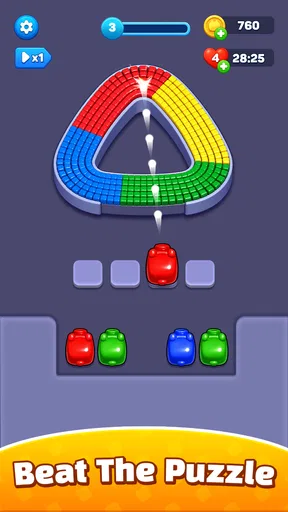
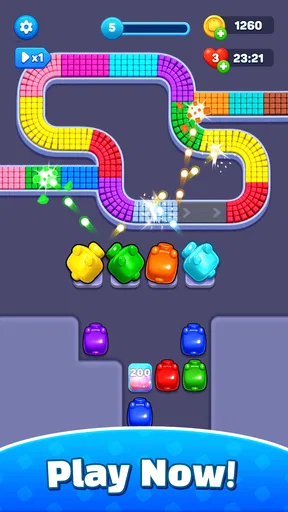
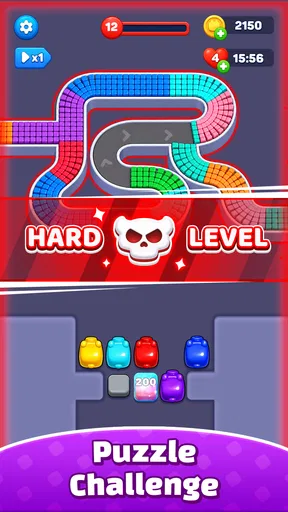
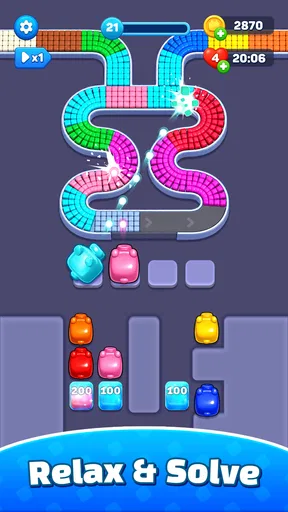
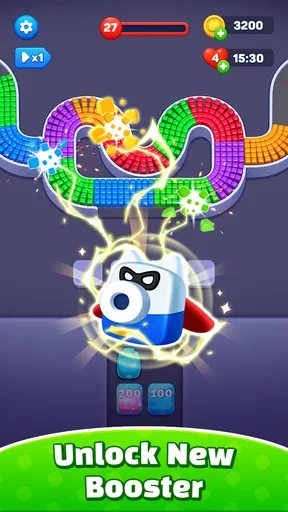
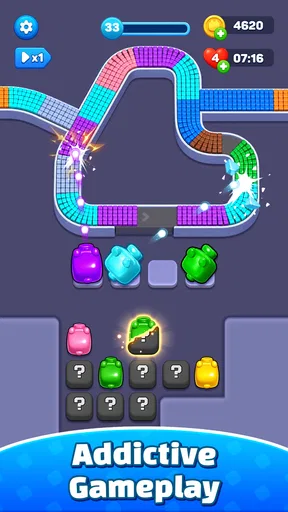
Our Review of Block Loop Shooter
 Analysis by Appyee
Some puzzle games ask for patience, others ask for fast reactions, and a few manage to make a short break feel surprisingly satisfying. Block Loop Shooter belongs to that last group for me. Its basic idea is easy to understand: I guide the movement of a looping stream, line up shots by color, and try to clear the pieces before the conveyor-like flow becomes difficult to control. The appeal arrives almost immediately, because the game gives me a simple visual problem and lets me act on it without a long tutorial or a complicated menu system.
That simplicity is also the reason I would not recommend it to everyone. This is a focused puzzle game rather than a deep strategy experience. It works best when I want a compact challenge with clear goals, quick feedback, and enough pressure to keep my attention for a few minutes. If I am looking for a large adventure, a story, or a puzzle game built around elaborate rules, this will feel limited. If I want something I can pick up while waiting for coffee or during a short commute, it makes much more sense.
How the color-and-flow puzzle feels in the first few sessions
The central interaction is readable from the first attempt. Blocks move through a loop or conveyor-style path, and I shoot pieces according to their colors. Matching the right color is the obvious part; the more interesting challenge is deciding when to fire. A shot can solve the immediate problem, but it can also leave the next section of the flow in a worse position. That small tension gives the game more personality than a simple tap-to-clear puzzler.
I like that the game does not bury its main idea under unnecessary systems. The screen is built around the moving path, the incoming pieces, and the shot I am preparing. That makes it easy to understand even when I return after a few days away. The visual language is direct enough that I can usually tell what needs attention without stopping to decode icons or read long instructions.
The first useful habit is to stop treating every available shot as equally valuable. When the path is moving steadily, I get better results by looking one or two positions ahead rather than firing at the first matching block I notice. Clearing a color can open a useful gap, but it can also accelerate the arrival of the next dangerous section. I found that a little restraint often produces a cleaner chain than constant tapping.
That makes the game suitable for players who enjoy light planning without wanting a demanding brainteaser. The decisions are small, but they arrive frequently. I am not building a long-term plan across a huge board; I am managing the next few seconds of movement, color, and space. The result is approachable while still giving experienced puzzle players something to optimize.
As a free game from Brave HK Limited, it is easy to try without committing money at the start. The title is listed for Everyone, which fits the straightforward presentation and accessible rules. It has also reached over a million installs and holds a 4.5 average from roughly twenty-eight thousand ratings, so there is already a substantial audience for this particular style of casual puzzle play.
A strong fit for short, interrupted play
The best everyday use case is a small pocket of time with no guarantee that I will be able to finish a long activity. Imagine waiting for an appointment while checking the clock every few minutes. I can open the game, play a compact stretch, and focus on the color-flow problem instead of learning a new system. The immediate objective is clear, and the visual action gives me something to do without demanding the kind of concentration that a competitive action game would require.
It also works well after a tiring day, when I want interaction rather than passive scrolling but do not have the energy for a complicated game. The color matching and moving path provide just enough mental work to feel engaging. I can play carefully when I am alert, or simply enjoy the satisfying rhythm of clearing obvious targets when I want something lighter.
There is a trade-off here. Because the premise is so direct, the game does not create the same sense of discovery as a puzzle title that constantly introduces new mechanics. Its pleasure comes from execution, timing, and increasingly efficient decisions. Players who need a fresh rule every few minutes may lose interest sooner than players who enjoy refining the same basic skill.
Why timing matters more than fast tapping
The most useful approach I found was to watch the shape of the flow before acting. A matching color near the front may be tempting, but shooting it immediately is not always the best move. Sometimes it is better to wait for the loop to bring a more favorable arrangement into view. This is not a complicated technique, but it changes the game from reflexive tapping into a small exercise in timing.
I also learned to use the edges of the visible path as warning areas. When the moving pieces begin to occupy too much of the route, I stop thinking only about the current match and start looking for the shot that creates breathing room. That shift is important: the goal is not merely to remove one block, but to prevent the flow from becoming crowded enough that every later decision feels forced.
Another practical tip is to avoid playing with the same hurried rhythm after a mistake. A missed opportunity can make the next few moments feel chaotic, but rushing usually makes the color order harder to read. I get better results by resetting my attention on the next safe match and rebuilding control gradually. The game rewards composure more than frantic input.
This gives the puzzle a modest but genuine learning curve. I do not need to memorize a complicated system, yet I can feel myself improving as I recognize safer sequences and stop wasting shots. That kind of progress is ideal for casual sessions because it does not require a guide or a long training period. The screen itself teaches me what went wrong if I pay attention to the movement.
Returning after a break and judging the long-term appeal
One of the game’s strongest qualities is how easy it is to resume mentally. The objective remains familiar, and the main action does not depend on remembering a story, a character build, or a large collection of special rules. When I come back after an interruption, I can usually understand the situation within moments. That matters for a game aimed at short sessions, because a complicated re-entry process would defeat the purpose.
For a quick return, I recommend spending the first few seconds observing rather than shooting immediately. The loop gives useful information about what colors are approaching and how much space remains. A brief pause in my decision-making helps me avoid making a low-value shot simply because it is available. This is especially useful when I have opened the game after being distracted by a message or a conversation.
The game’s interruption tolerance is good in the practical sense that its core challenge is easy to understand again. It is not the same as saying every session can be stopped at any moment without consequence. A moving puzzle can still punish a delayed response, so I would avoid starting a round when I know I may need to put the phone down immediately. For a genuinely unpredictable situation, a non-interactive app or a turn-based puzzle would be safer.
That distinction is important. Block Loop Shooter feels comfortable for short breaks, but it is not a perfect “play for two seconds and disappear” tool. The flow continues to matter, and the best experience comes when I can give the screen at least a little uninterrupted attention. I would call it interruption-friendly rather than completely interruption-proof.
The free entry point also makes it easy to test whether that rhythm suits me. The game includes in-app purchases ranging from forty-nine cents to eighty-nine dollars and ninety-nine cents per item. I would not treat those options as part of the reason to play. For me, the value is in the basic puzzle loop, and anyone sensitive to optional spending should review purchase settings before handing the phone to a child, even though the content rating is Everyone.
Where replay value comes from
Replay value here comes less from collecting a world of content and more from trying to handle the flow more cleanly. I can replay with a different mindset: survive safely, clear colors efficiently, or avoid wasting shots. That gives the same basic interaction several small goals. It is a good fit for players who enjoy beating their own previous performance rather than needing a large narrative reason to return.
Still, the repetition is visible. The color-and-conveyor formula is the whole identity of the game, so people who tire quickly of repeating a familiar action will notice the limitation. I would not install it expecting the variety of a broad puzzle collection. I would install it because the central loop is pleasant enough to revisit in small doses.
My advice is to use it as a rotation game rather than an all-day game. A few sessions spread across the day preserve the satisfying clarity of the mechanic. Playing continuously for a long stretch can make the repeated structure feel more obvious, especially if I am not chasing a personal improvement. The game is strongest when it fills spare minutes, not when I demand endless novelty from it.
Compared with a traditional match-three puzzle, this title puts more emphasis on timing and the movement of the board. In a static grid, I can often scan the available combinations at my own pace. Here, the path creates pressure, so the same color match has a different value depending on when it appears. That makes Block Loop Shooter more active and immediate, although less relaxing for someone who prefers unlimited planning time.
Compared with an endless runner, it is calmer and more deliberate. I am not steering a character through obstacles at high speed; I am managing a visual sequence and choosing shots. Players who like the tension of an approaching threat may enjoy the crossover, while players who want pure reflex action may find the pace too measured. Against a large strategy puzzle, it is much easier to learn but offers less room for elaborate long-term thinking.
Who should play it, and who should skip it
I would recommend it to casual puzzle fans who want a clear objective, colorful visual feedback, and sessions that can fit around ordinary life. It is particularly suitable for someone who likes matching games but wants the board to move and create pressure. It can also work for a family device because the rules are accessible and the age rating is Everyone, though I would still keep an eye on the optional purchase range.
I would be more cautious recommending it to players who dislike real-time pressure, even at a light level. If I want to examine every move without the board changing, a static logic puzzle will be a better choice. The same is true for anyone seeking a strong story, character progression, or a sense of exploration. None of those expectations match what this game does best.
Device compatibility is broad enough for older Android hardware because the minimum requirement is Android 7.0. The current version is 5.2.2, which is useful context for someone deciding whether the game belongs on an existing phone rather than a new device. I would still judge the experience by the individual handset, especially if the screen is small, because color recognition and path visibility are central to making good decisions.
That screen consideration is not trivial. The game depends on noticing color order and judging the position of moving pieces quickly. On a cramped display, the action may feel busier than it does on a larger phone. Players with difficulty distinguishing colors should also be realistic about whether the visual matching system is comfortable for them; a puzzle built around color-based decisions is not ideal if its main signals are hard to separate.
My practical verdict after living with the loop
What I appreciate most is the game’s immediate pleasure. I do not need to prepare for a session. I can open it, see the moving sequence, and understand what I am trying to accomplish. The satisfaction comes from making a clean shot at the right moment and watching the flow become manageable again. That feedback is simple, but it is exactly why the title works as a casual time-filler.
The main limitation is equally clear: once the novelty of the loop settles, my interest depends on whether I enjoy improving within that loop. There is no point pretending it offers the breadth of a full-featured puzzle adventure. Its value is narrower and more honest. It gives me a compact color-and-timing challenge, and it does that without making me learn a large rulebook.
For a realistic daily routine, I would use it during waiting periods, between errands, or as a short reset after work. I would not choose it for a long flight if I wanted one game to occupy the entire journey, because the repeated structure could become tiring. I would pair it with another genre, using this one when I want quick decisions and a clean visual objective rather than deep immersion.
Brave HK Limited has built something that understands the appeal of a small, repeatable puzzle loop. The free price makes experimentation easy, the Everyone rating keeps the presentation approachable, and the established player response suggests that the format has broad casual appeal. The optional purchases are worth treating carefully, but they do not change my assessment of the basic experience.
My final view is favorable with one condition: enjoy it for what it is. This is a short-session puzzle about reading movement, choosing the right color, and staying calm as the loop advances. If that sounds satisfying, I think it is worth trying. If I need constant novelty, deep strategy, or completely pause-proof play, I would choose a different puzzle instead. For quick bursts of focused entertainment, though, it earns a place on my phone.
Verdict
Strengths of Block Loop Shooter
- Simple controls make it easy to start playing immediately.
- Short rounds are ideal for quick gaming sessions.
- Bright block-based visuals are clear and easy to follow.
- Increasing difficulty keeps the gameplay challenging over time.
- Works well for players who enjoy casual arcade shooters.
Limitations of Block Loop Shooter
- Gameplay may feel repetitive after extended sessions.
- Limited variety can reduce long-term replay value.
- Some levels may become frustrating as difficulty increases.
- The minimalist graphics may not appeal to all players.
- Progression could feel basic for experienced shooter fans.
Other Releases by Brave HK Limited
View All
Fruit Merge™: Match Game
Puzzle4.4

Snake Puzzle: Slither to Eat
Puzzle4.4

Yarn Fever! Unravel Puzzle
Puzzle4.7

Sand Sorting Challenge
Puzzle4.7
Similar Picks in This Category
View All
Block Blast!
HungryStudio4.8

Braindom: Brain Games Test
Lahana Game Studio4.6

AMAZE!
CrazyLabs LTD4.6

Sudoku - Classic Sudoku Puzzle
Oakever Games4.7

Art Puzzle - Puzzle Games
Easybrain4.8

Amaze GO!
Oakever Games4.9
Frequently Asked Questions
What is Block Loop Shooter and how does the gameplay work?
Block Loop Shooter is an arcade-style puzzle and shooting game built around quick reactions, aiming, and clearing incoming block formations. You control a shooter, launch projectiles, and try to remove targets before they reach a dangerous point. The looping structure makes each round increasingly challenging, so success depends on choosing the right angle, managing shots carefully, and reacting quickly as patterns change.
Is Block Loop Shooter free to download and play?
Block Loop Shooter can generally be downloaded and played without an upfront purchase, although the exact availability may depend on whether you use Android or iOS. As with many free mobile games, optional advertisements or in-app purchases may be included. These can support the developer, unlock additional content, or improve convenience, but you should review the store listing before downloading to confirm current pricing and purchase details.
Does Block Loop Shooter require an internet connection?
The basic arcade gameplay in Block Loop Shooter may be suitable for short offline sessions, which is useful when you are traveling or have limited mobile data. However, certain features can depend on an internet connection, including advertisements, online rankings, cloud-related services, updates, or purchases. Offline behavior may also vary between versions, so it is best to test the game after installation rather than assuming every feature works without connectivity.
Is Block Loop Shooter suitable for children and casual players?
Block Loop Shooter is relatively easy to understand because its main concept focuses on aiming, shooting, and clearing blocks. That makes it accessible to casual players, while progressively harder patterns can still provide a challenge for experienced users. Parents should nevertheless check the age rating, advertising settings, and any in-app purchase options, since store classifications and monetization features may vary by platform and region.
What should I know about performance, controls, and in-app purchases before downloading?
The game is designed for quick pick-up-and-play sessions, but the experience can depend on your device's screen size, processor, operating-system version, and available storage. Touch controls are usually straightforward, although precise aiming may take a little practice. Before installing, check the latest store requirements and user reviews, and remember that optional purchases or advertising may affect how comfortably you progress through longer sessions.
Play our best games!


